
Generation Detail
绘图结果
相似提示词
已合并 4 条相似提示词,当前阈值 82%
4
提示词
参考图

创作者信息
赤
相似提示词
# 4057
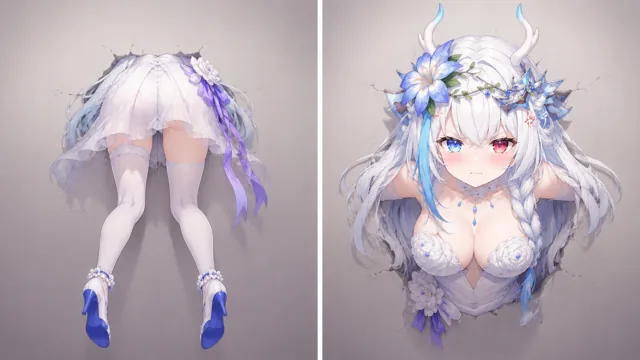
Create a single 16:9 anime-style illustration containing two vertical panels arranged side by side, separated by a clear divider.
Both panels show the same character stuck halfway through the same wall, viewed from opposite sides.
Rear view only. Show only the lower half of the character outside the wall. The upper half is completely hidden inside the wall and outside the frame. The legs hang downward naturally or remain lightly suspended, with a slightly helpless and trapped posture. Focus on the lower-body silhouette, the body position, and the stuck-at-the-wall staging.
RIGHT PANEL:
Front view only. Show only the upper body of the same character emerging from the wall, visible from the abdomen upward. The lower body remains trapped inside the wall. The shoulders are slightly tense, the body is clearly stuck, and the head faces toward the viewer. Focus on the upper-body expression and the trapped posture.
WALL STAGING:
The wall opening closely matches the body and is mostly hidden by the character. Avoid showing a large empty hole. Only a small amount of inner shadow and wall-edge contour should be visible around the body, making it feel like the character is firmly wedged in place.
COMPOSITION:
Keep the two-panel layout clear and readable. Use the same wall event in both panels. Simple wall background, minimal distractions, clean framing, and strong readability. Do not prioritize outfit details, character identity, or background complexity.
Expression add-on:
The expression looks embarrassed and irritated, with a frustrated pout and slightly angry reaction at being seen in such an awkward trapped situation.
Style add-on:
high-quality anime CG rendering, polished finish, refined anatomy, smooth shading, soft lighting, premium illustration quality

# 4055
Create a single 16:9 anime-style illustration containing two vertical panels arranged side by side, separated by a clear divider.
Both panels show the same character stuck halfway through the same wall, viewed from opposite sides.
Rear view only. Show only the lower half of the character outside the wall. The upper half is completely hidden inside the wall and outside the frame. The legs hang downward naturally or remain lightly suspended, with a slightly helpless and trapped posture. Focus on the lower-body silhouette, the body position, and the stuck-at-the-wall staging.
RIGHT PANEL:
Front view only. Show only the upper body of the same character emerging from the wall, visible from the abdomen upward. The lower body remains trapped inside the wall. The shoulders are slightly tense, the body is clearly stuck, and the head faces toward the viewer. Focus on the upper-body expression and the trapped posture.
WALL STAGING:
The wall opening closely matches the body and is mostly hidden by the character. Avoid showing a large empty hole. Only a small amount of inner shadow and wall-edge contour should be visible around the body, making it feel like the character is firmly wedged in place.
COMPOSITION:
Keep the two-panel layout clear and readable. Use the same wall event in both panels. Simple wall background, minimal distractions, clean framing, and strong readability. Do not prioritize outfit details, character identity, or background complexity.
Expression add-on:
The expression looks embarrassed and irritated, with a frustrated pout and slightly angry reaction at being seen in such an awkward trapped situation.
Style add-on:
high-quality anime CG rendering, polished finish, refined anatomy, smooth shading, soft lighting, premium illustration quality

# 4051
Create a single 16:9 anime-style illustration containing two vertical panels arranged side by side, separated by a clear divider.
Both panels show the same character stuck halfway through the same wall, viewed from opposite sides.
Rear view only. Show only the lower half of the character outside the wall. The upper half is completely hidden inside the wall and outside the frame. The legs hang downward naturally or remain lightly suspended, with a slightly helpless and trapped posture. Focus on the lower-body silhouette, the body position, and the stuck-at-the-wall staging.
RIGHT PANEL:
Front view only. Show only the upper body of the same character emerging from the wall, visible from the abdomen upward. The lower body remains trapped inside the wall. The shoulders are slightly tense, the body is clearly stuck, and the head faces toward the viewer. Focus on the upper-body expression and the trapped posture.
WALL STAGING:
The wall opening closely matches the body and is mostly hidden by the character. Avoid showing a large empty hole. Only a small amount of inner shadow and wall-edge contour should be visible around the body, making it feel like the character is firmly wedged in place.
COMPOSITION:
Keep the two-panel layout clear and readable. Use the same wall event in both panels. Simple wall background, minimal distractions, clean framing, and strong readability. Do not prioritize outfit details, character identity, or background complexity.
Expression add-on:
The expression looks embarrassed and irritated, with a frustrated pout and slightly angry reaction at being seen in such an awkward trapped situation.
Style add-on:
high-quality anime CG rendering, polished finish, refined anatomy, smooth shading, soft lighting, premium illustration quality

# 3958
Create a single 16:9 anime-style illustration containing two vertical panels arranged side by side, separated by a clear divider.
Both panels show the same character stuck halfway through the same wall, viewed from opposite sides.
Rear view only. Show only the lower half of the character outside the wall. The upper half is completely hidden inside the wall and outside the frame. The legs hang downward naturally or remain lightly suspended, with a slightly helpless and trapped posture. Focus on the lower-body silhouette, the body position, and the stuck-at-the-wall staging.
RIGHT PANEL:
Front view only. Show only the upper body of the same character emerging from the wall, visible from the abdomen upward. The lower body remains trapped inside the wall. The shoulders are slightly tense, the body is clearly stuck, and the head faces toward the viewer. Focus on the upper-body expression and the trapped posture.
WALL STAGING:
The wall opening closely matches the body and is mostly hidden by the character. Avoid showing a large empty hole. Only a small amount of inner shadow and wall-edge contour should be visible around the body, making it feel like the character is firmly wedged in place.
COMPOSITION:
Keep the two-panel layout clear and readable. Use the same wall event in both panels. Simple wall background, minimal distractions, clean framing, and strong readability. Do not prioritize outfit details, character identity, or background complexity.
Expression add-on:
The expression looks embarrassed and irritated, with a frustrated pout and slightly angry reaction at being seen in such an awkward trapped situation.
Style add-on:
high-quality anime CG rendering, polished finish, refined anatomy, smooth shading, soft lighting, premium illustration quality